Our Competitors' Content Pillars
Across the top AI agent governance competitors, we identified six core content pillars that appear consistently in their blogs. These themes form the foundation of how companies in this category attract and educate their audience.
PILLAR 1. Named-vulnerability and exploit research
Used by
Noma, Runlayer, Obot, Zenity (4/6)
The category's signature move: give a real vulnerability a name, and the security press repeats it and links back.
Topic clusters
- named zero-click exploits (Noma's GeminiJack)
- MCP RCE & STDIO classes (Runlayer's MCP STDIO RCE)
- agent-to-agent attack chains (Straiker's ClawHub → Moltbook)
- prompt-injection teardowns (Runlayer's "Pwning OpenClaw")
- OWASP agentic Top 10 (Runlayer, Straiker)
Strategic Purpose
Earn Backlinks
Creates PR assets that journalists cite, directly converting to high-authority backlinks.
Research Credibility
Signals research credibility to the CISO buyer far more convincingly than any product post.
Brand Authority
Act as the vertical's backlink engine, lifting Domain Rating through press pickup.
PILLAR 2. Category education and definitional SEO
Used by
Obot, Noma, Runlayer, Zenity, Guild (5/6)
The top-of-funnel land-grab for a category whose vocabulary is still being written.
Topic clusters
- what is an MCP / agent gateway (MintMCP's Definitive Guide; Obot)
- AI vs MCP vs agent gateway (MintMCP)
- what is agentic AI / AISPM (Zenity's Academy)
- what is a prompt injection (Archestra)
Strategic Purpose
Own the Vocabulary
Claim canonical definitions for new terms before they become highly competitive.
Capture High-Volume
Capture the highest-volume informational searches early in the market lifecycle.
Frame the Category
Define the problem in a way that naturally leads to their specific product solution.
PILLAR 3. Agent identity, access, and runtime governance
Used by
Runlayer, Noma, Zenity, Guild, Obot (5/6)
The mid-funnel pillar demonstrating operational expertise on the exact problem the product solves.
Topic clusters
- agent & non-human identity (Noma's "Secure Agentic Identity")
- fine-grained permissions, PBAC vs FGA (Runlayer)
- MCP access control in the enterprise (Obot)
- agent audit trails (Runlayer)
Strategic Purpose
Bridge Theory & Tooling
Answer practical "how do I govern agents" questions for CISOs and platform engineers.
Implicit Positioning
Solve the problem in prose while selling the product solution implicitly.
Qualified Traffic
Drive highly engaged, conversion-ready readers (e.g., Runlayer's 3.13 pv average).
PILLAR 4. Regulatory, compliance, and the CISO agenda
Used by
Noma, Zenity, Guild, WitnessAI, Obot (5/6)
The senior-buyer pillar aimed at the economic buyer rather than the developer.
Topic clusters
- EU AI Act / AI executive order (Noma's CISO Playbook)
- OWASP / Gartner / NIST analysis (Straiker)
- board-level AI ROI (WitnessAI's "Executive's Guide to AI ROI")
- CISO agentic-risk guides (Zenity current-events)
Strategic Purpose
Newsjacking Traffic
Capture timely search spikes from OWASP, Gartner, NIST, or White House releases.
Executive Credibility
Signal that the vendor is plugged into what leadership and boards care about.
Stay in Consideration
Keep the brand top-of-mind for CISOs making quarter-level strategic decisions.
PILLAR 5. Commercial comparison & category capture
Used by
Obot, Guild (2/6)
The least-used pillar in the top six — and the one that maps most directly to GEO: whether an AI engine names you.
Topic clusters
- best / top-N gateways & governance platforms (Obot's "13 Best MCP Gateways")
- "[vendor] vs [vendor]" (MintMCP vs Credal)
- "[competitor] alternatives" (MintMCP's "5 Runlayer Alternatives")
- buyer's guides & capability checklists (MintMCP's Buyer's Guide)
Strategic Purpose
Capture In-Market Buyers
Target bottom-of-funnel queries at the exact moment of tool evaluation.
Control the Narrative
Whoever writes the comparison gets to frame the rules and place themselves at the top.
Get Named in AI Answers
We asked 4 AI engines who to buy: the vendors that surfaced (Obot, Zenity, WitnessAI) are the ones on comparison lists; the $132M Noma isn't.
PILLAR 6. Product, partnerships, and proof
Used by
All competitors (6/6)
The backlink-and-sales pillar, made up of announcements, integrations, and case studies.
Topic clusters
- partner & integration launches (Noma × Kong / Databricks / Vercel)
- enterprise case studies (WitnessAI's Fortune-500 stories)
- funding & milestones (Series A/B announcements)
- product releases & integrations (Zenity's Claude Compliance API)
Strategic Purpose
Partner Backlinks
Earn high-authority backlinks directly from massive partner domains (AWS, Databricks).
Close Enterprise Deals
Provide the social proof needed for sales teams to close Fortune 500 contracts.
Press Spikes
Drive short-term attention through funding rounds and strategic hires.
Summary of Shared Pillars
| Pillar | Primary Achievement | Funnel | Usage |
|---|---|---|---|
| 1. Named-vuln & exploit research | Backlinks + research authority | ToFu | 4 / 6 |
| 2. Category education / definitional SEO | High-volume search + vocabulary ownership | ToFu | 5 / 6 |
| 3. Agent identity, access & runtime governance | Qualified traffic + implicit product positioning | MoFu | 5 / 6 |
| 4. Regulatory, compliance & CISO agenda | Credibility + timely (decaying) traffic | MoFu | 5 / 6 |
| 5. Commercial comparison & category capture | AI-answer citations + high-intent conversion | BoFu | 2 / 6 |
| 6. Product, partnerships & proof | Partner backlinks + deal closing | All | 6 / 6 |

The Big Takeaway
SEO — traditional search. Authority from named-vulnerability research (Pillar 1), definitional content that owns the vocabulary (Pillar 2), governance guides that pull qualified traffic (Pillar 3), and regulatory newsjacking (Pillar 4). This is where most competitors are strong.
GEO — generative-engine optimisation. Getting named when a buyer asks an AI which tool to use — increasingly the first step in how people research, plan and shortlist. The lever is comparison content (Pillar 5), and most competitors leave it on the table.
GEO is also the faster board to win: Google's AI Overview renders above the classic search results, and it cites whoever wrote the best comparison at any domain authority. So a newer, lower-authority brand can surface above the DR-67 incumbents — no years of backlinks required.
One quick proof of the GEO gap: when we asked four AI engines which tool to buy, the vendors they named were the ones with comparison content — at any funding level.
The Strategic Pattern
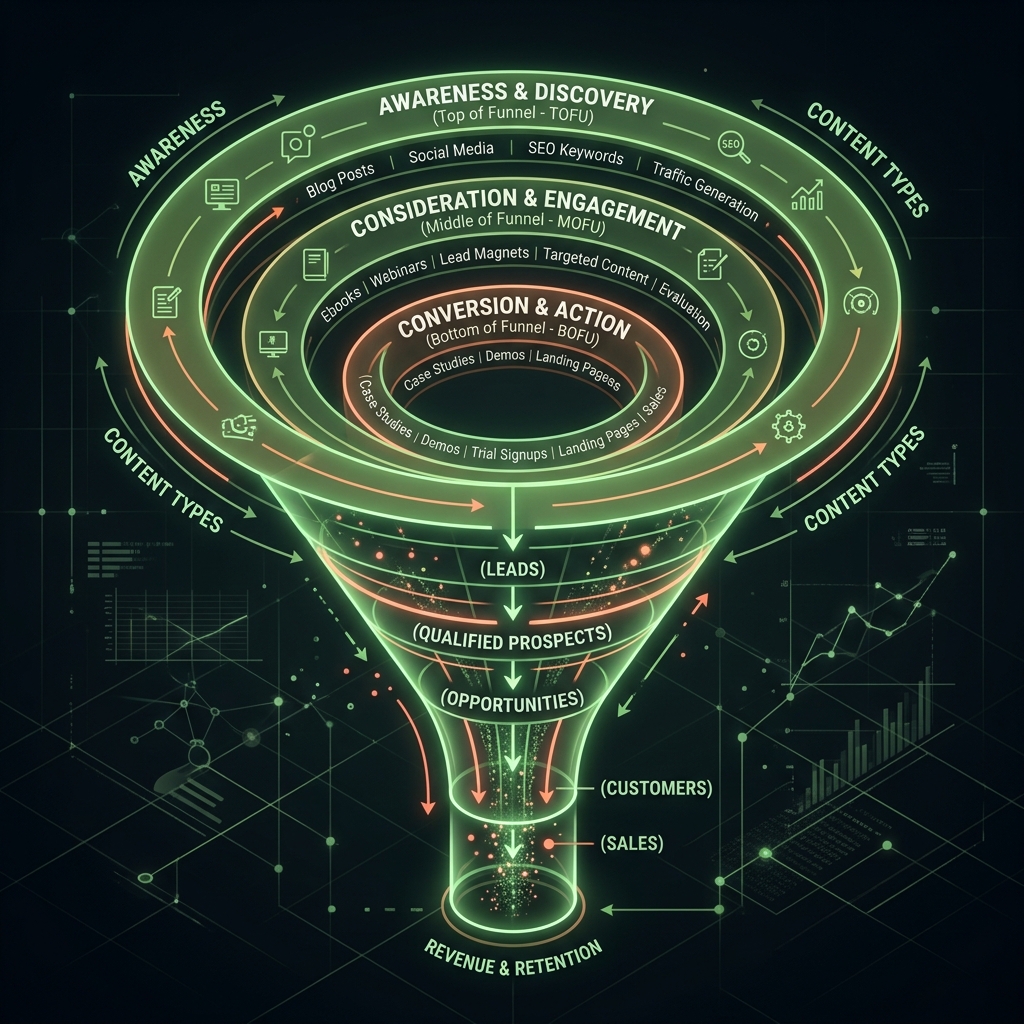
Together, these layers create a three-layer content funnel across the entire buying journey for AI agent governance.
Category Framework Content
Defines the problem. Top-of-funnel named vulnerability research and definitions. Captures broad search.
Implementation & Governance Guides
Explains how to solve it. Mid-funnel operational expertise targeting the CISO and platform engineers.
High-Intent Comparison Content
Introduces the product category. Bottom-of-funnel 'versus' pages driving pipeline and AI visibility.
What each layer buys:
Top → SEO authority: research the security press links (Zenity's DR 67, Noma's press backlinks)
Middle → SEO demand: the governance guides a CISO reads while evaluating
Bottom → SEO + GEO: comparison content that ranks for "best X" and gets cited by the AI engines
Where Willow stands — and what the AI engines say
We asked ChatGPT, Gemini, Perplexity and Claude — memory off — which AI-agent tool an enterprise should buy. Across 8 answers, Willow appeared in none. Obot, Zenity and WitnessAI did. Willow runs ~17 posts across Pillars 2 and 3, but they were bulk-published (no dates, not in the sitemap, no RSS) and it's on none of the comparison lists the engines read from — so it's behind on both boards: nothing compounds in search (SEO: Authority Score 2, ~1 organic visit), and no AI engine names it (GEO).
Pillar 2 · Definitional — Strong
~8 educational posts (What Is Shadow AI, the MCP adoption gap, "think like a PM"). Its biggest pillar.
Pillar 3 · Identity & access — Solid
~5 governance posts (agent identity, policy "dials not switches", Claude Code policy). Its home turf.
Pillar 6 · Product & proof — Some
The rebrand, the $7M funding post, and one Wix case study. No partner co-marketing posts yet, despite real Okta & AWS ties.
Pillar 1 · Security research — Shallow
Risk explainers only ("10 MCP security risks") — no named original research, which is what earns the category's press backlinks.
Pillar 4 · Regulatory / CISO — Absent
No newsjacking of OWASP, Gartner, or AI-policy releases.
Pillar 5 · Comparison — Empty
Zero "Top X" / "vs" content — so Willow is on none of the lists the AI engines quote. Empty.
Top Keyword Clusters
A breakdown of the highest-volume search terms currently owned by each competitor across the agentic AI and MCP landscape.